The path of forgiveness can feel like climbing a steep, tangled mountain trail — exhausting, disorienting and overwhelming. The pains of betrayal, injustice or deep offense cling like vines, threatening to pull us back down toward anger and bitterness.
When we’re deeply wounded by someone, forgiveness doesn’t often come quickly or easily.
But forgiveness, though difficult, is not just a step toward healing. It’s the path that Jesus wants His followers to take: “Make allowance for each other’s faults, and forgive anyone who offends you. Remember, the Lord forgave you, so you must forgive others” (Colossians 3:13, NLT).
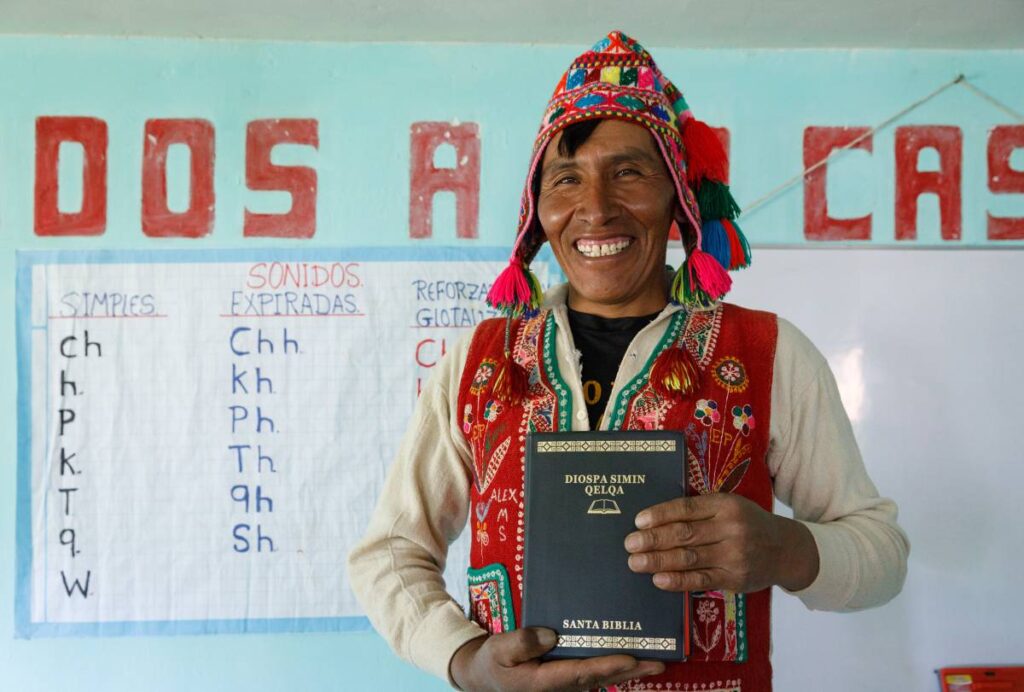
And for people around the world, understanding the concept of forgiveness, what God says about it and how they can begin that journey of healing starts the moment they encounter God’s Word in a language they clearly understand.
God’s Word Leads to Forgiveness
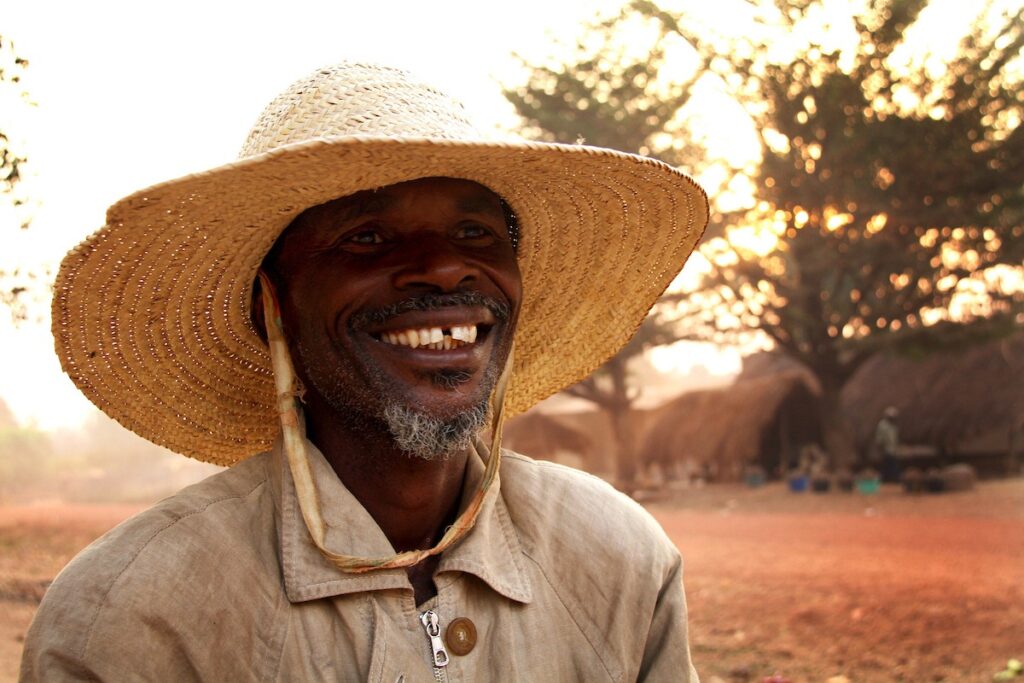
In the remote hills of Cameroon, Pastor Pius Mbahlegue witnessed firsthand the life-altering power of Scripture in his community after his village was attacked by a mob from a rival village. The armed mob drove 3,000 people to flee, burned 400 homes and destroyed the village crops. Many people lost everything they owned.
Naturally the people were angry and bent on revenge. “Some were saying they could never forgive the people who had done these things to them,” Pastor Mbahlegue said.
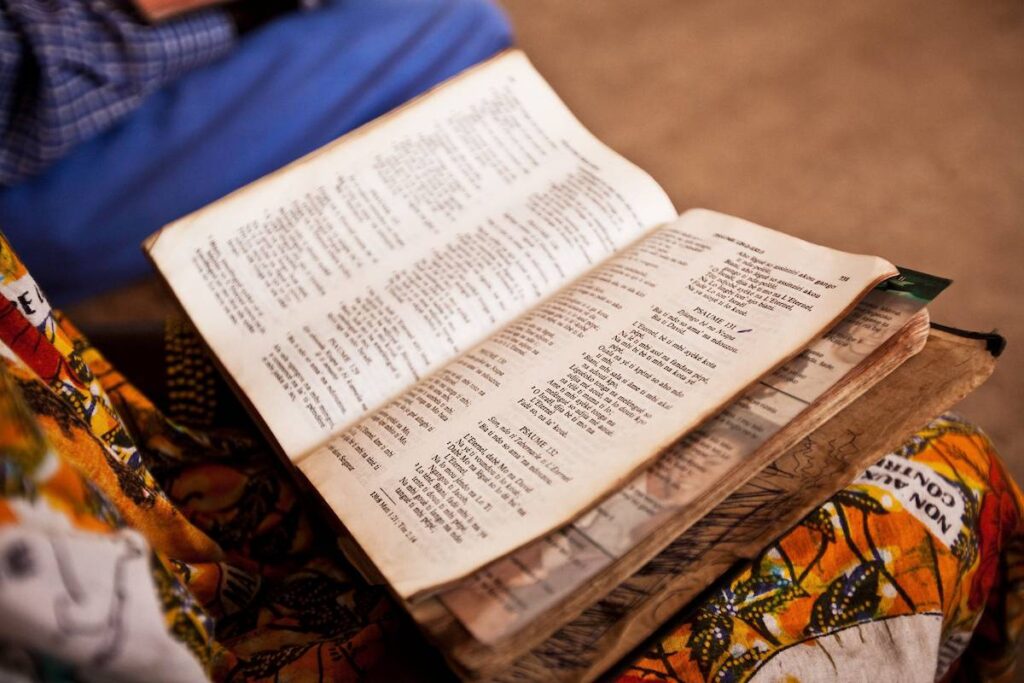
But the next Sunday, this faithful man of God opened the Gospel of Luke, which had recently been translated into the local language, Chrambo. He read Luke 6:27:
“… Love your enemies! Do good to those who hate you.”
Those powerful words of Jesus — spoken in Chrambo — pierced even the hardest of hearts in the community.
The Scriptures turned Pastor Mbahlegue’s flock away from the path of revenge and an unending cycle of violence and onto the path of reconciliation and forgiveness — all because the people experienced God’s Word in their language. “Forgiveness can only come in if God comes in,” Pastor Mbahlegue emphasized.
This is the power of Bible translation. When people finally have access to Scripture in a language and format they understand clearly, God’s truth does more than just inform: It transforms hearts.
Want to read more stories like this? Journey 7:9 is a short email series that takes you around the world to meet people whose lives have been changed by God’s Word in their language — stories of healing, hope and transformation you won’t want to miss.
What the Bible Says About Forgiveness
Forgiveness is one of the clearest commands in Scripture and one of the hardest to obey. But God doesn’t leave us alone to figure out how to forgive others. He gives us a clear picture of what true, Christlike forgiveness looks like in His Word.
While not an exhaustive list, these five truths from Scripture reveal God’s heart for forgiveness and why access to His Word for individuals and communities alike matters so deeply:

1. Forgiveness Is a Choice
Biblical forgiveness is not based on our feelings. It’s a deliberate act of our will — a decision to release resentment, even when it feels undeserved. Ephesians 4:31-32 (NLT) reminds us:
“Get rid of all bitterness, rage, anger, harsh words, and slander, as well as all types of evil behavior. Instead, be kind to each other, tenderhearted, forgiving one another, just as God through Christ has forgiven you.”
This command may seem difficult or even impossible — especially if someone has deeply wounded you — but God doesn’t want you to stay in oppressive bitterness. You’re destined for the fresh winds of healing you’ll find as you climb higher up the slope of forgiveness.
This path to forgiveness is not meant to be walked alone. God’s Spirit is with us as we journey, and His Word guides us in our next steps: “Your word is a lamp to guide my feet and a light for my path” (Psalm 119:105, NLT).
2. God Sets the Example
There are no shortcuts to forgiveness. It isn’t something we can do on our own or by our own strength. True forgiveness flows from the forgiveness God first extended through His Son, Jesus Christ.

When you truly understand the scope of the forgiveness Jesus offers us all, you can’t help but model that example to the people around you.
His overwhelming grace provides us with the motivation and strength to follow what would otherwise be an impossible mandate:
“Since God chose you to be the holy people he loves, you must clothe yourselves with tenderhearted mercy, kindness, humility, gentleness, and patience. Make allowance for each other’s faults, and forgive anyone who offends you. Remember, the Lord forgave you, so you must forgive others” (Colossians 3:12-13, NLT).
God sets the example for forgiveness; He forgave us for our sins. While you might be tempted to avoid forgiving someone by pretending away the hurt or packing down difficult memories, every way other than the one Jesus has provided leads to a dead end.
Because God is our ultimate example, when we rely on His Spirit and His Word to guide our thoughts and actions, we are able to love and forgive others the way that He did.
3. Reconciliation Reflects God’s Heart
Where possible, forgiveness can open the door to reconciliation, restoring relationships between people and repairing trust. This reflects God’s own desire to reconcile with humanity. As Romans 5:10 (NLT) notes:
“For since our friendship with God was restored by the death of his Son while we were still his enemies, we will certainly be saved through the life of his Son.”
God didn’t wait until humanity “deserved” reconciliation. He initiated it through Christ while we were still in opposition to Him: “But God demonstrates his own love for us in this: While we were still sinners, Christ died for us” (Romans 5:8, NLT).
In the same way, forgiving other people can be the first step toward restoring our relationships with them — not because their offense was small, but because Jesus’ grace is great.
Forgiveness doesn’t always mean full restoration, however, especially in harmful or destructive situations. But whether or not reconciliation happens, forgiveness always means releasing the grip that hatred has on our hearts and choosing to reflect God’s generous mercy to the world around us.
4. Forgiveness Brings Freedom
Unforgiveness is like a chain that binds both the wounded and the offender. Forgiveness, however, breaks those chains. It frees your heart from the prison of bitterness and brings you the kind of peace that the world can’t offer.
Jesus reminded us of the freedom that comes from Him alone: “So if the Son sets you free, you will be free indeed” (John 8:36, NIV). When people understand these words from Jesus in their own language, they experience the liberating power of the gospel. Forgiveness is no longer an abstract virtue or concept. It becomes a real, transformative invitation into freedom — not just freedom from pain, but from the power of sin, resentment and shame.
This is why Bible translation matters: When communities receive Scripture in their language, they also have the opportunity to walk in biblical freedom, one step at a time.
5. It’s a Process, Not a Shortcut
Forgiveness isn’t a one-time event; it’s a lifelong journey. Like a mountain trail that loops back or grows steeper when we least expect it, forgiveness often requires persistence and dependence on God’s grace and strength through setbacks.

Whether these setbacks happen because old memories surface or new offenses occur, forgiveness remains the only way forward. In Matthew 18:21-22 (NLT) Jesus gave Peter a clear answer about how to deal with ongoing hurt: “Then Peter came to him and asked, ‘Lord, how often should I forgive someone who sins against me? Seven times?’ ‘No, not seven times,’ Jesus replied, ‘but seventy times seven!’”
Even when you have to limit or completely remove a person’s destructive access to your life — a response that’s necessary in some situations — you still may have to forgive that person every time they come to mind, continuously working through the repeated layers of hurt that remain.
Thorough healing takes effort and time. Instead of thinking about the whole climb, just take the next step God directs you to take.
Clarity Comes as You Climb
The further a person travels along the path of biblical forgiveness, the more God causes their view to clear. In the valley of bitterness, our perspective is clouded by anger and sorrow. But as you keep climbing the path of forgiveness as Jesus instructed us, your clarity begins to return, and God helps you see beyond the pit; life is no longer about only your own circumstances.

Our journeys are no longer defined by hurt. Instead, God causes our view to widen, showing us not just personal healing, but glimpses of His grand redemptive plan for all creation: “Against its will, all creation was subjected to God’s curse. But with eager hope, the creation looks forward to the day when it will join God’s children in glorious freedom from death and decay” (Romans 8:20-21, NLT).
Forgiveness isn’t only about moving past personal wounds. It’s about joining with the entire body of Christ — across nations, languages and cultures — in the freedom Jesus offers through relationship with Him and the power of His Word.
Think about how Bible verses just like the ones above have helped you in hard times. Imagine not having access to the full scope of God’s redemptive plan — from Genesis to Revelation. How would you know that God sent His Son to save us from our sins and redeem us?
The Bible is more than just words on a page; it’s the living Word of God that has the power to capture hearts and transform lives forever. You can be a part of seeing the Bible — the greatest story ever told — go out in all languages so that all people can know God and His plan for their lives.
God Finishes What He Starts
In His Word, God reminds us that He is always with us, working in ways beyond what we can see: “And I am certain that God, who began the good work within you, will continue his work until it is finally finished on the day when Christ Jesus returns” (Philippians 1:6, NLT).
Whether it takes weeks, years or decades, God promises to be with us as we actively walk the path of forgiveness. His Spirit strengthens us throughout the process, His Word sustains and He remains faithful to guide us.
No matter the burden or the depth of the wound, God’s Word equips His people to forgive one another just as He has forgiven us, and to move toward wholeness with open hands and open hearts.