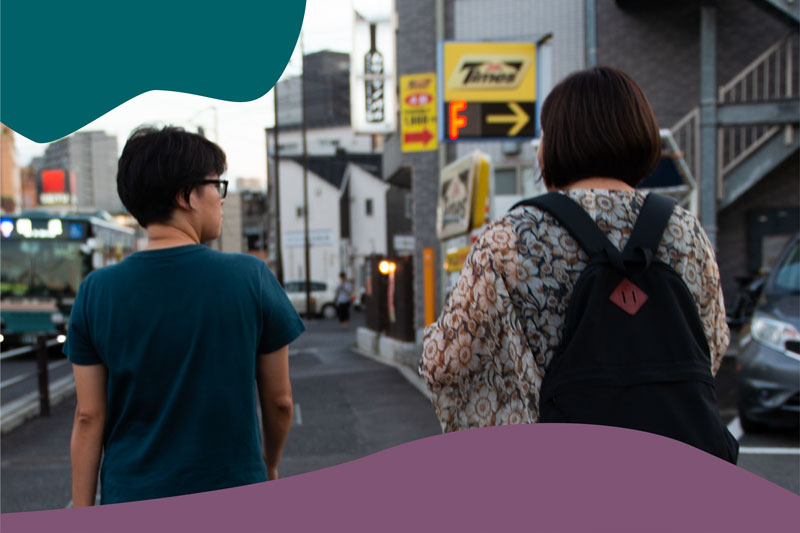
On a bullet train speeding through the Japanese countryside, Sora Adachi and Uiko Yano pass a tablet back and forth to each other. They’re drawing portraits of each other and then laughing at how badly the portraits turned out. Laughter is part of the foundation of Uiko and Sora’s friendship, and it’s a huge part of their personalities too. They lovingly joke around, play with social media face filters on their phones, travel and embark on adventures, and share a mutual love of chai tea lattes.
But what connects Sora and Uiko is deeper than coffee or laughter — it’s their passion for God’s Word in Japanese Sign Language.
LOOK AROUND YOU
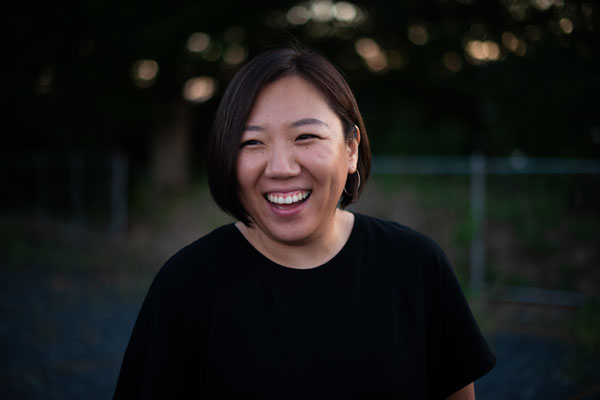
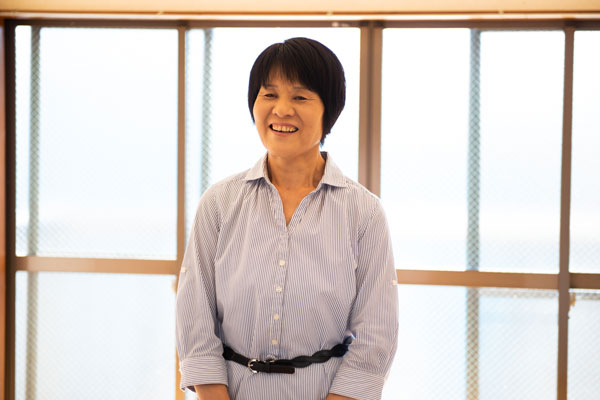
In a little house just outside of Tokyo, Uiko and Sora work together on the ViBi (which stands for “Visual Bible and Video Bible”) team, which is translating the Scriptures into Japanese Sign Language. Uiko serves as the project manager and Sora is an exegetical research assistant who also works as the team’s public relations staff member. There’s one noticeable difference between Sora and Uiko: Sora is hearing, and Uiko is Deaf.
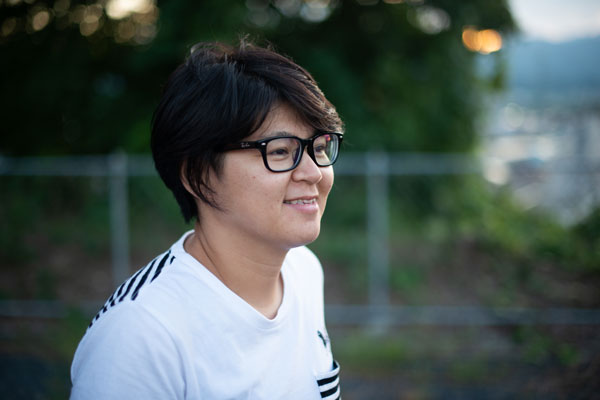
Sora grew up in a household where she knew about God and went to church every Sunday, but it wasn’t until college that she made a decision to follow Jesus. Before joining the ViBi team, Sora only knew spoken Japanese and English.
“Because I’m a hearing person, I could not communicate in Japanese Sign Language when I first started working with [the team],” she recalls. “But they’re so patient in teaching me how to sign and how to communicate with them. … It’s a completely different world [compared] to the environment and culture in which I grew up. When I first started working here, I thought: ‘There’s not going to be any culture shock.’ But Deaf culture is totally different. In the Great Commission, Jesus says ‘go’ and make disciples. But going somewhere doesn’t mean going somewhere far. Actually within your country, within your community, within your city, there’s a whole new world going on. For me, as a Japanese hearing person, it was a Deaf community in Japan. I had no idea that there were so many Deaf people within my community, within my city.”
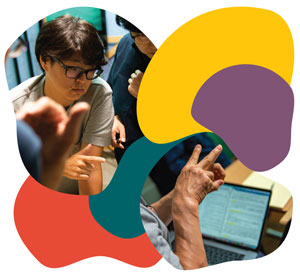
Sign Language Translation
You can help bring the hope of Scripture to Deaf people around the world by praying for the Japanese Sign Language project and other translation projects like it.
She asks me to think about what would happen if I went to a church where a pastor only preached from the book of Matthew. How would I know the story of creation? Or the heartbreaking, emotional beauty of the Psalms? She asks me to consider: What if the pastor taught, based on limited access to Scripture, that God says women should stay at home and only serve their husbands? What if he told me that women are better to be seen and not heard?
If I had no way, between Monday and Saturday, to study the full counsel of God’s Word and learn about Jesus on my own, all I’d know about God and his Word is what I’d see or hear on a Sunday.
Admittedly, I’d never really thought about that before. And I recall something Uiko had signed to me earlier in the day: “Everyone, no matter who you are, [has] the right to get to know … the Word of God.”
SEEING THE BIBLE
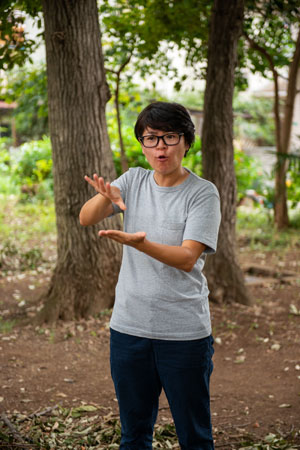 “I started wondering, ‘Is this the Word of God?’ It was totally different from what I was told as a child.”
Uiko is passionate about Scripture and its holistic impact on the Deaf in Japan. The Deaf community is small to begin with in the country, and the Christian population among the Deaf is even smaller. Her desire is that the Japanese Sign Language Bible will transform people’s hearts and also the way that they see their value in God’s eyes.
I’m moved as Uiko talks about how much of an injustice it is for Deaf to be told to learn to read Japanese to communicate with God:
“When we [Deaf people] read Japanese, no matter how hard we practice, we will never be able to get that connection between the texts and sounds because we simply cannot hear. When it comes to something that ‘speaks’ to our hearts, it would definitely be by seeing someone sign.”
“Just like in the States, [where] a lot of people speak and read [spoken] English and that’s important for you, for us Deaf people, it is important and necessary for us to see the signs with our eyes,” she explains. “If we were to listen and read without signing, that would be difficult or impossible. In other words, it is the same as if you were told not to use English and use [your] hands to communicate instead. That would be difficult for you. That’s why sign language is important for me.”
A FOUND FAMILY
The ViBi team meets every morning before work to study the Scriptures together. They carefully take their shoes off at the front door of their office — which is actually a small house — and put on slippers before walking through a narrow hallway into the kitchen, grabbing breakfast foods from the fridge or coffee from the pot on the counter.
There’s a winding, steep wooden staircase that leads to two rooms where most of the team has set up their offices. But downstairs, the team drags chairs and stools around a table into a room right off the kitchen: their conference room.
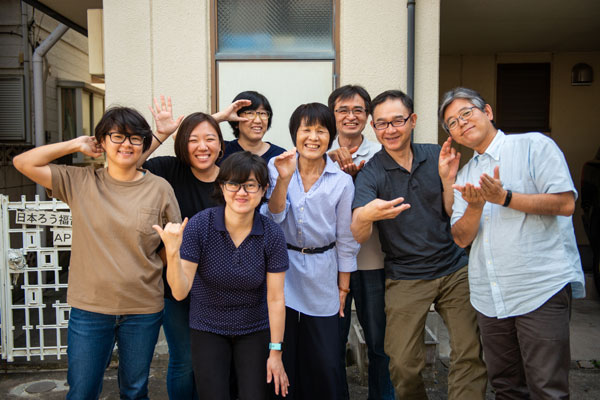
I sit on the stairs and watch the translation team discuss James 4 in Japanese Sign Language, knowing that without Sora interpreting for me, I wouldn’t understand what was being said. But I’m fascinated by their passionate conversation. I learned later on that they were discussing what James said about judging others, and the lines between judging people and correcting them. As the dialogue unfolds, I think about my own team at Wycliffe USA; we have similar group discussions as we analyze Scripture during our devotional times.
Watching their interactions, getting to know each team member individually, and watching them function as a translation team, the idea of “found family” forms in my mind — a group of people knit together by circumstances, experiences and interests though not by blood.
A PART OF THE FAMILY
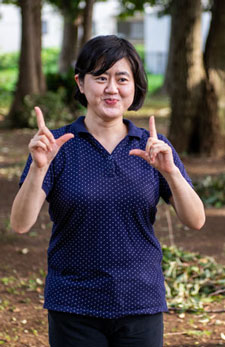
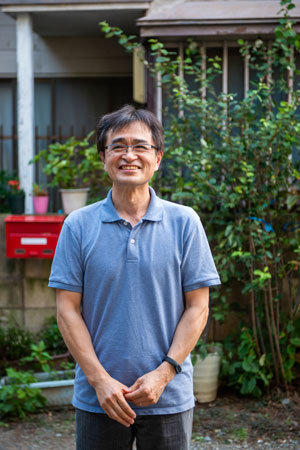 our church family. That really encourages me.”
SOMETHING GREATER
The ViBi team is knit together by something greater than their backgrounds, experiences or even their language. They’re a family anchored in the truth; their roots are deep in Christ. “And I pray that you, being rooted and established in love, may have power, together with all the Lord’s holy people, to grasp how wide and long and high and deep is the love of Christ” (Ephesians 3:17b‑18, NIV).
“I’m really honored to be a part of this project and a part of this family,” Sora says with a smile. “Because we are just like family.”
Sign Language Translation
You can help bring the hope of Scripture to Deaf people around the world by praying for the Japanese Sign Language project and other translation projects like it.