As human beings, we often have a narrow lens of understanding — we have no true concept of the big picture like God does.
But God is limitless in His understanding, and He is the God of the impossible. He takes us finite, fallible human beings and, through His power, uses us for His glory. He takes our weaknesses and infuses us with His supernatural power to accomplish His will and plan.
God has called each of us to something significant, simply because He lives and dwells in us.
But we can often tend to think that only people who have overcome large obstacles or accomplished big and mighty things are “heroes.” In reality, these people are ordinary human beings — just like you and me — who God used in extraordinary ways. The odds might be stacked against them but, with God’s help, mountains are moved and He turns unlikely people into heroes.
Florence (Florrie) Hansen and Eunice Pike are two such people. They were the first team of single women to begin translation work with SIL, Wycliffe’s primary partner. And through their efforts, they opened the door for many single women to participate in Bible translation in the years to come.

Women like Florence and Eunice left a legacy of faith. They broke barriers and devoted themselves to missions so that other people could know the Good News in a language and format they clearly understood.
Today, missionaries around the world continue this legacy. They face the unknown and serve according to God’s calling for their lives. God continues to work through Wycliffe missionaries to help people encounter God’s Word for the first time.
You can help make their work possible by partnering with the ministry of a Wycliffe missionary.
Against the Odds

Florrie and Eunice attended Camp Wycliffe, a linguistic training program, in the summer of 1936 — the
third session of this new program. Camp Wycliffe began several years before Wycliffe Bible Translators USA was even founded as an organization.
After the women completed the training program, William Cameron Townsend, Wycliffe’s founder, was excited to learn that they wanted to work on a translation project in Mexico. But his friend and counterpart, L.L. Legters, was reluctant when Cam told him this.
“Think of the criticism we’d get for sending two young girls … where not even male missionaries have ever gone.” But Cam disagreed, pleading their case until Legters finally conceded. “Oh, all right. Go ahead, Townsend, and do what you think best. But I don’t like it.”
Legters wasn’t the only one who disagreed with sending two women into the field on their own. The decision was unprecedented for the time, and stretched people’s perceptions of what was acceptable for women — particularly single women — to do. Others also warned against sending the women, saying that the area was dangerous, or even that they were “too good-looking to be [missionaries].”
But when Cam passed on the warning to the women, they both looked at him in surprise. “Why, don’t you believe God can take care of us?”
Stepping Out in Faith
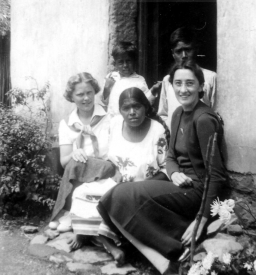
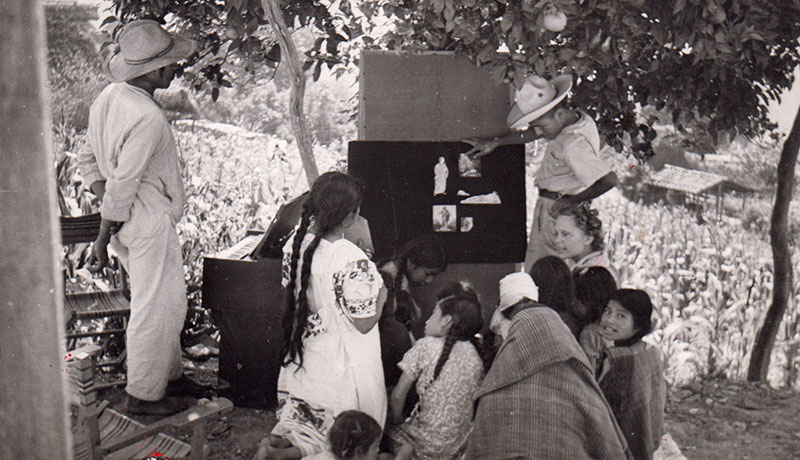
Confident that God would be with them, Florrie and Eunice moved to the mountainous Mazatec village in Oaxaca, Mexico. Eunice’s brother, Ken, escorted the two women and helped them rent a house and learn their first Mazatec words before he left them to begin their life and work in the village.
They were the first SIL team of single women to ever live and work in a village on their own. And while Florrie and Eunice had complete confidence that God would take care of them, many still struggled with the decision as it stretched their perception of what was safe and appropriate for young Christian women to do. But Cam continued to encourage and support the women’s decision. “Those of us who have wondered just what place single lady missionaries might have in our project have learned from this lesson that God has heroines today,” he shared.
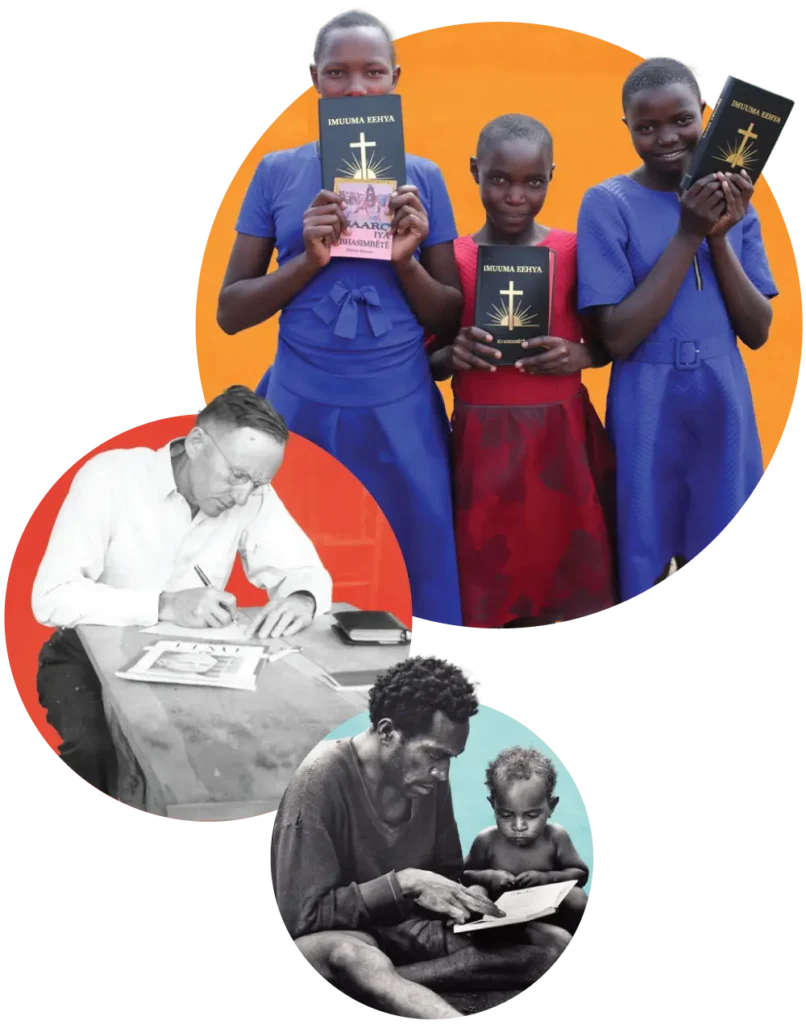
Ever wonder how Bible translation became a global movement?
Wycliffe’s history began in 1917 when a young missionary named William Cameron (“Cam”) Townsend realized people needed the Bible in their own language. Florrie and Eunice were among the first to join this vision, stepping out in faith to help bring Scripture to people in Mexico. That moment launched a global movement that’s still changing lives today. And you’re part of it!
From a summer training camp to a worldwide Bible translation effort, God has been writing this story at Wycliffe for more than 80 years.
Heroines in Bible Translation
Florrie and Eunice excelled in their work in the Mazatec village. Because of their pioneering, Camp Wycliffe went from having separate men’s and women’s camps to one unified camp. And by 1940, there was no mention of gender in any publicity material. Instead, the brochures simply stated: “All persons are invited to apply who are going to pioneer fields where the language work is not yet finished.”
By the fall of 1940, there were five pairs of single women working in different language communities throughout Mexico. In early 1941, 22 out of 37 linguists working in Mexico were women. And half of those 22 were single women! By the fall of 1944, two-thirds of 122 members were women, with one-third being specifically single. Wycliffe had been started by a group of men, but women were quickly finding their role in Bible translation too.
By 1941, Florrie and Eunice had completed the rough draft of the Mazatec New Testament — a first in the history of Mexico’s indigenous languages.
Florrie and Eunice were pioneers, and — more importantly — they were unlikely heroes. They not only helped open the door for women to serve in Bible translation, but they also were successful in their translation for the Mazatec community. By 1941, Florrie and Eunice had completed the rough draft of the Mazatec New Testament — a first in the history of Mexico’s indigenous languages, and just six years after they began work in the village.
God’s ability to work through us is not dependent on who we are or what we’re capable of; it’s about whose we are and what He’s capable of doing through us. All we need to do is step out in faith and be willing to let God use us for His glory. And that’s exactly what Florrie and Eunice did.
Missions Today: Serving Locally and Globally as the Church
Jesus commissioned His Church to go and make disciples of all nations. Through passionate people, God is at work locally and globally, opening doors to make His name known.
Churches have an unprecedented opportunity to step into this mission by partnering with communities around the world through Bible translation.
When your church chooses to pray for, give to and advocate for Bible translation, communities just like the Mazatec receive Scripture in their language. You’re helping people experience the full story of God’s love — some for the very first time.
Teach your congregation about the power of God’s Word, invite them to see how Bible translation intersects with the Great Commission and inspire them to take part so that all people can experience the gospel in a language and format that resonates with them.
This is our moment as the Church to be bold, generous and faithful. Let’s answer the call by living on mission.