What if generosity wasn’t meant to be practiced alone?
Two families discovered that giving together not only multiplied their impact in Bible translation — it deepened their friendships, shaped their children and strengthened their faith.
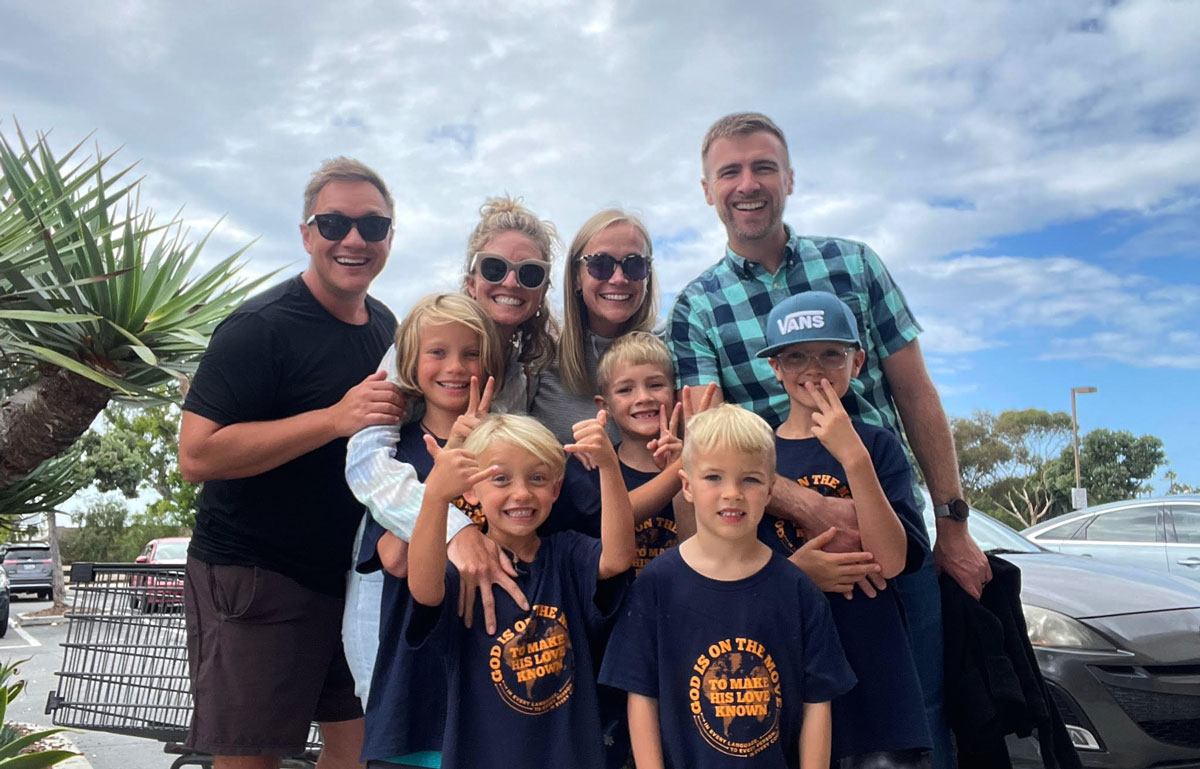
Nick and Rachel Wolverton have cared deeply about Bible translation for years. But over time, they began wondering what it might look like to invite others into that passion too.
A few years ago, they asked some of their closest friends, Josh and Kaitlin Saenz, to join them in supporting Bible translation together.
The two families already shared much of life side by side. As they pursued intentional community in everyday life, they began to ask another question: What would it look like to practice generosity in community too?
Why These Families Chose to Give Together
For both families, generosity became more than a personal decision. It became an extension of the community they were already building together.
Rather than giving separately, they decided to combine resources and support a Bible translation project together — believing they could make a greater impact collectively than individually.
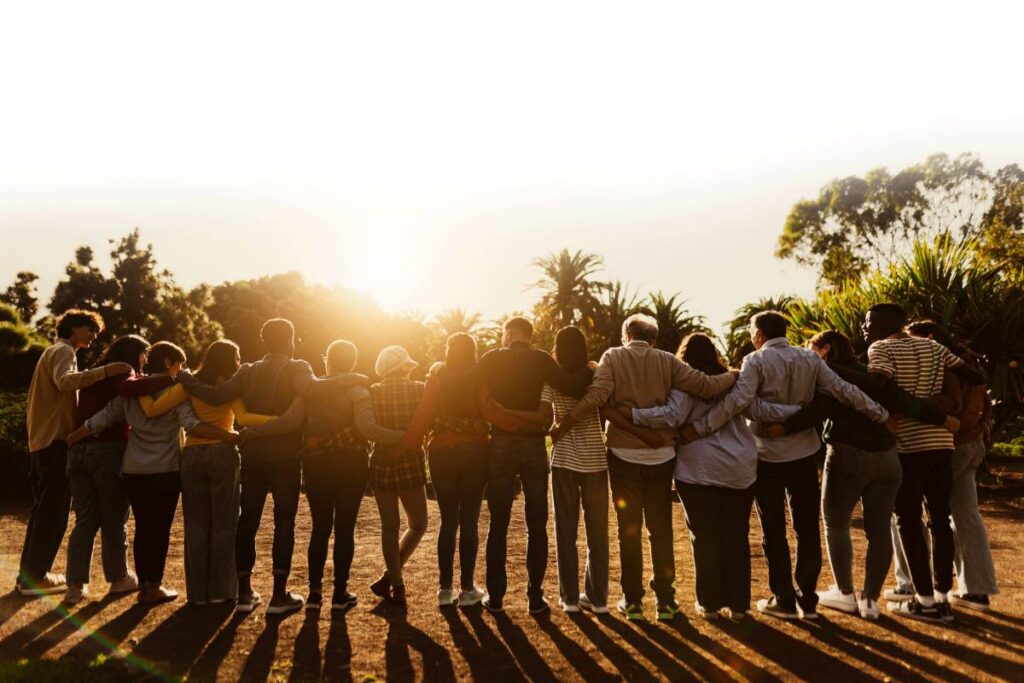
“We’re linking arms together and bringing our daily lives into more alignment — not only in the places that we worship and serve in, but also the strategic ways that we can give,” Josh shared.
Teaching Children Generosity Through Community
The couples are also instilling a spirit of communal generosity in their children — who range in age from 5 to 9 years old.
It’s their desire to raise their kids — the next generation — to feel comfortable in a space of shared generosity where they are helping advance the Great Commission.
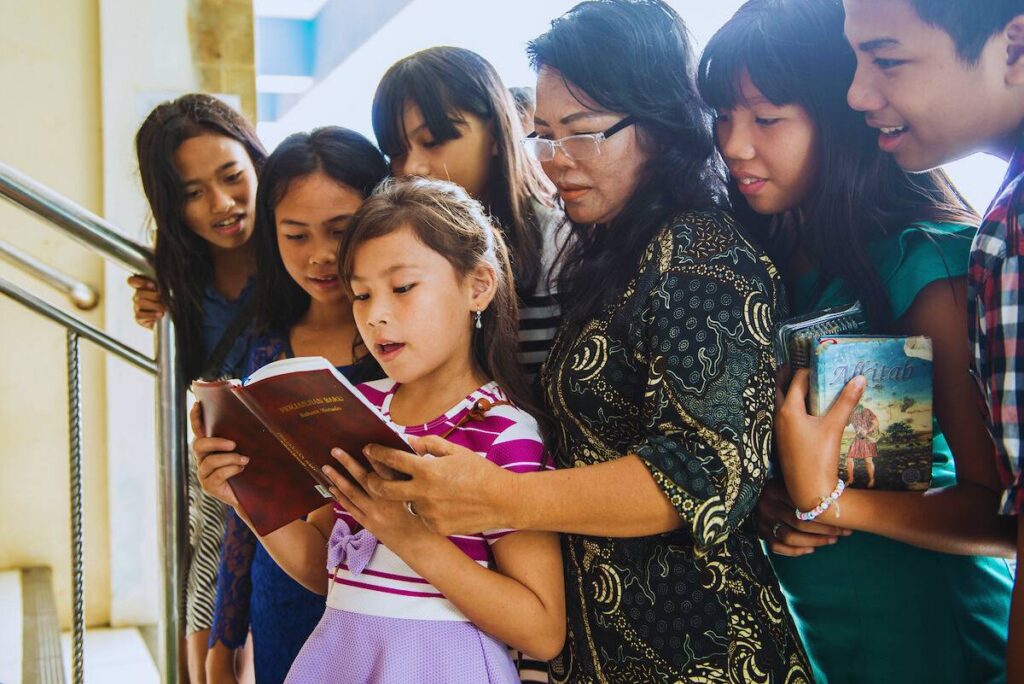
“To instill generosity and a love for the Bible for all people in our kids at a young age meant a lot to us,” Kaitlin shared. “[We want] our boys to get to know that the Bible is not something that we want to take for granted, but something … to cherish — not only for ourselves, but for people around the world who don’t have that access.”
Teaching kids about living generous lives is important, but the Wolvertons and Saenzes want their children to see the value of being in community with others. As Hebrews 10:24 reminds us: “Let us think of ways to motivate one another to acts of love and good works” (NLT).
“Because of the individual nature of American culture, generosity and money in general are topics that aren’t on the table. And we don’t want that to be the case,” Nick shared.
He and Rachel want to model a different way of life for their children. He continued: “[Generosity] is, in fact, another part of the Christian life that gets discipled through community and through relationships.”
The couples have invited other friends to participate in practicing collective generosity, sharing their passion for Bible translation and the projects they support.
Both couples would encourage everyone else to do the same in order to forge deeper community with one another.
“For people who are thinking, ‘How do I find this community that expands beyond one portion of my life?’ It’s taking risks in conversation and putting out an ask and asking people to pray and join you,” shared Kaitlin.
How Collective Giving Expands Impact
Both the Wolvertons and the Saenzes agree that the blessings of practicing generosity together are incredible. God has entrusted them with resources — their time, talents and treasures — that they have the opportunity to steward. And they’re seeking to steward them all well, for God’s glory and the good of His people around the world.
Josh shared: “In thinking about Wycliffe, it often seems like financially there’s going to be a ceiling for capacity for each one of us. But that doesn’t have to be true!”
He continued: “We can actually blow the ceiling off if we are inviting others into [giving]. That’s been one of the strategic ways that we’ve been thinking of how we can continue to be generous: by inviting others into [it] with us. And that’s been a huge joy because God’s already got the plan for how He’s going to accomplish His purposes.”
“Our joys gets to grow because we’re with one another,” Kaitlin said. “We can celebrate [what God is doing] individually, but when we come together, the celebration feels larger.”
For both families, giving together has become about far more than finances.
It has deepened friendships, shaped the way their children see generosity and reminded them that God often works through community to accomplish things far bigger than any one person could do alone.
And as they continue inviting others into the work of Bible translation, their prayer is simple: that more people would experience the joy of participating together in what God is doing around the world.