So faith comes from hearing, that is, hearing the Good News about Christ. — Romans 10:17 (NLT)
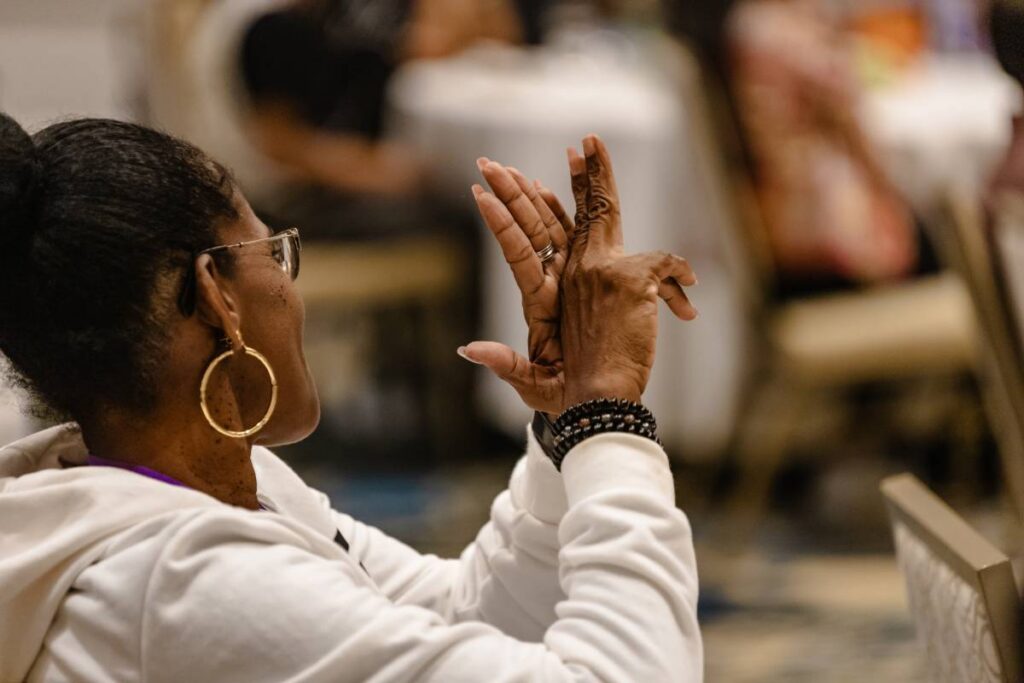
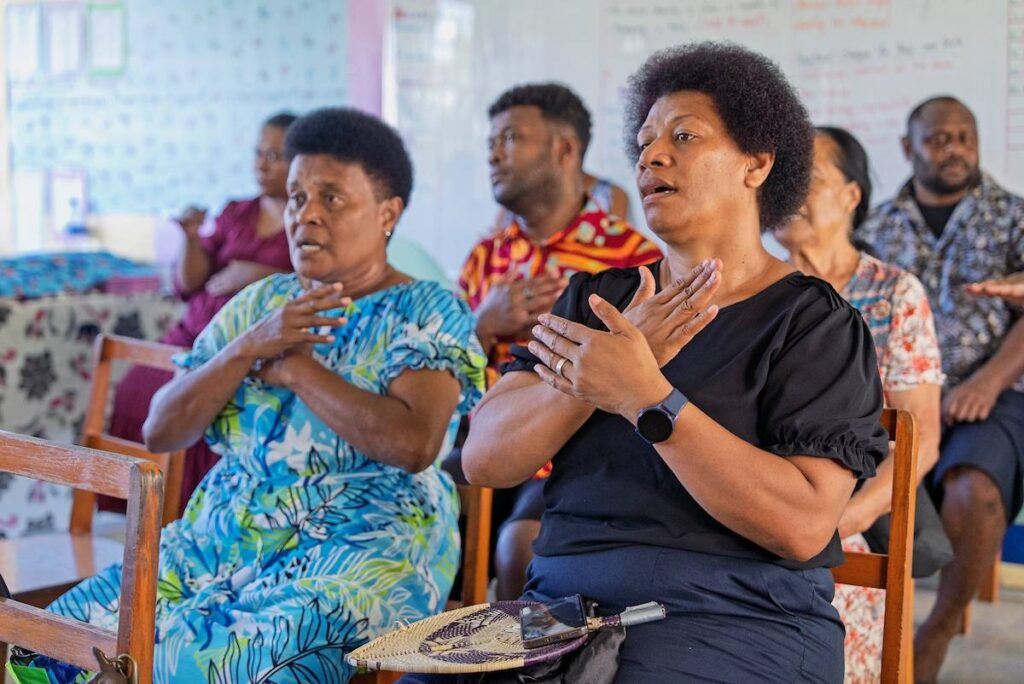
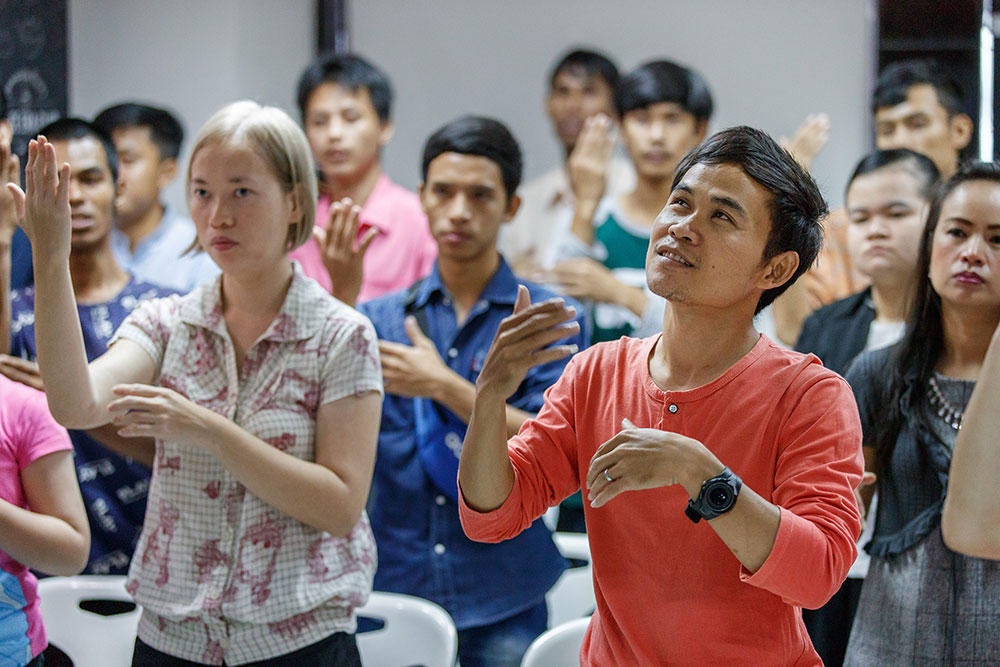
The Bible tells us that faith comes by hearing the Word of God. But sometimes hearing doesn’t happen with the ears. For as many as 70 million Deaf people around the world, “hearing” happens with the eyes.
Since Deaf people can’t hear, you may think of them as having a disability. But they don’t see it that way. In fact, through sign languages, Deaf people communicate with the same depth of meaning and nuance as any spoken language. The only difference is that one is visual and the other is auditory.
Still, because the global Deaf are considered a minority — and also represent the largest unreached people group in the world — they are at a disadvantage when it comes to operating within a hearing culture.
Unfortunately, Deaf communities around the world have suffered a long history of misunderstanding and discrimination.
“It’s really important for the hearing not to think, ‘Oh, they’re just miming or making stuff up with their hands,’” said Panuwat Manee, an editor and signer for Scripture translation in Thai Sign Language. “Really you need to stop and ask, ‘What does this mean?’ And then we’ll be able to understand each other well. And that’s important.”
Challenges of Being Deaf
One of the first challenges that most Deaf people face is being born into a hearing family. Unable to speak the language of the home, they are often misunderstood and isolated, having no connection to a Deaf community. As a result, they don’t learn a formal sign language until they are old enough to attend school — that is, if they have the opportunity to attend at all.
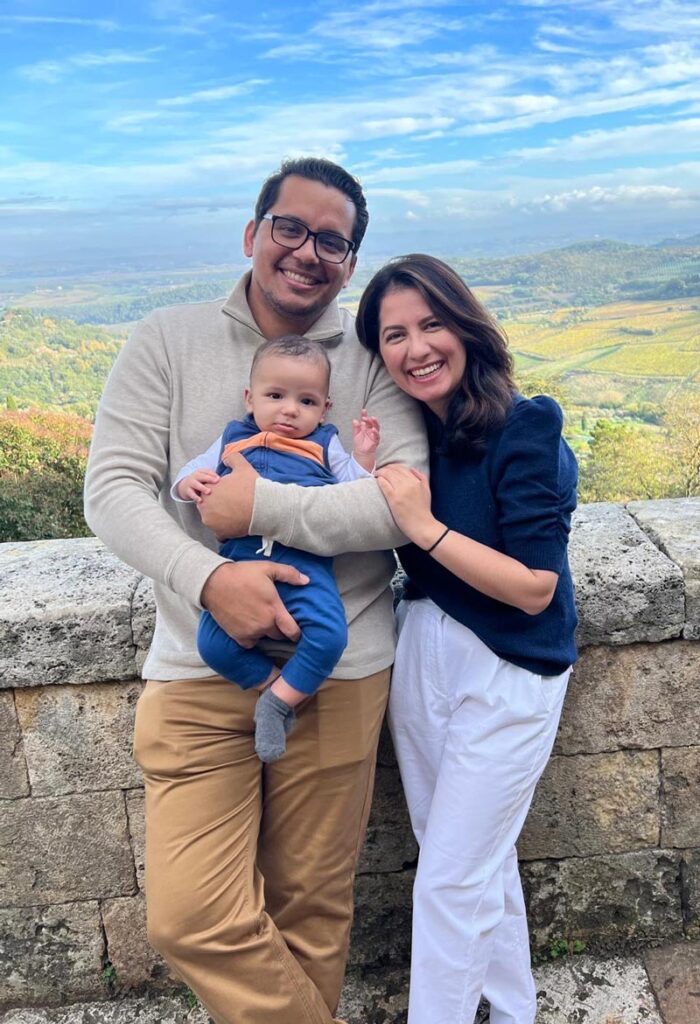
What happens when a hearing parent begins to understand the world through her Deaf child’s eyes?
Karen Vergara shares her powerful journey as a mother, and how God opened her heart to the urgent need for Bible translation in sign languages.
Another challenge for Deaf children is that hearing parents often send them to Deaf schools where the teachers sign using the grammar of the spoken language instead of the natural sign language. This makes it almost impossible for them to understand.
These schools also focus predominantly on teaching Deaf students to read and write the spoken language. As a result, Deaf students often fall behind their hearing peers.

“I was born Deaf, but growing up, I wanted to be hearing,” said Pastraporn Sarakong, wife of Panuwat Manee and leader of the Chronological Bible Translation team, which translates Bible stories in Thai Sign Language.
“I don’t know why, but my parents sent me to hearing school first. I didn’t understand what was going on. A teacher met with my parents and told them about a school for the Deaf. When I went to the school, at first I used the hearing signs I had been taught. But the Deaf told me that was not the true language of the Deaf. Once they taught me Thai Sign Language, I was suddenly able to communicate. Then I was able to learn not just school subjects, but about life as well.”
Reading Isn’t a Solution
You may assume that Deaf people can read a written language. But it may surprise you to learn something:
Sign languages are completely different from spoken or written languages.
Translating the Bible into sign language is not just about signing words; it’s about communicating God’s truth visually. A visual Bible not only looks different from printed Scripture, but it has different sentence structure and syntax too. For example, despite the similarity in name, Thai Sign Language is nothing like spoken Thai. They are as different as English and Spanish.
But it’s even more complicated than that.
You see, spoken languages work by lining up sounds in time — sound after sound after sound after sound. It’s sort of like a code, with each detail of a story having to be explained in order.
When we speak English, for example, we can add a bit of impact to our words by changing our intonation and adding facial expressions and hand movements, but we’re still limited to one word at a time. And when we have to write our words down, we’re even more limited because we lose those other elements.
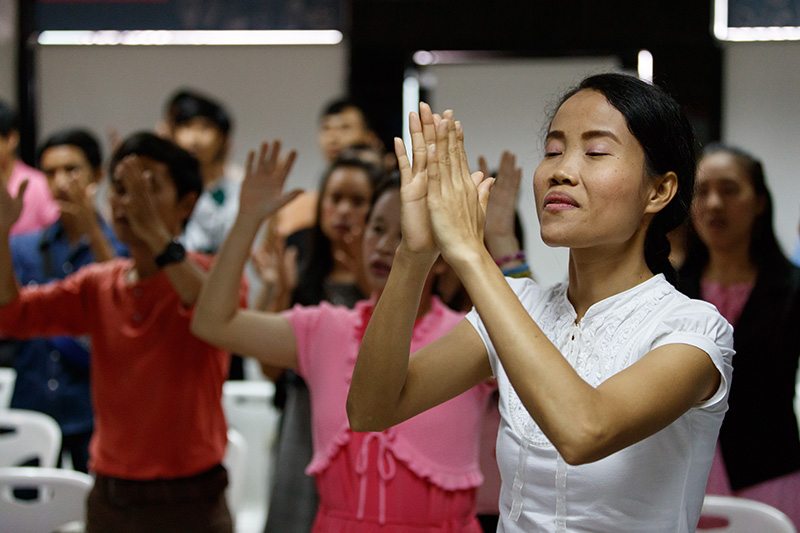
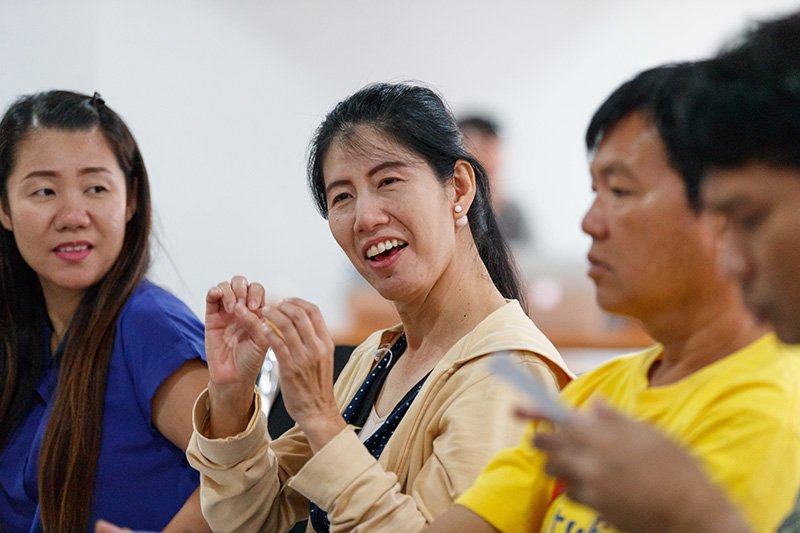
By comparison, sign languages are extremely dynamic: People use every part of their body to communicate — their hands, facial expressions, posture and body movement.
And because all of these elements are communicating different details at the same time, it can be really complicated for a hearing person to learn a sign language — a bit like trying to pat your head, rub your belly and hop on one foot all at the same time.
It can be equally difficult for a Deaf person to learn to read a spoken language. For one thing, it’s not their language. For another, it’s just static symbols on a page — a totally different format than they use in everyday communication.
The Code of the Written Language
Mark Penner, a Bible translation consultant, compared a Deaf person learning to read to a hearing person cracking a code written in numbers.
One day Mark was looking at the Bible on his computer. Below each English word was the corresponding number to Strong’s Concordance — a Bible study tool that assigns every English word a number that is tied to both a dictionary of the original Hebrew and Greek words and a list of cross-references.
While he was studying the text, Mark changed a setting on the computer, which hid the English translation from view, leaving only the concordance numbers. Suddenly he realized how a Deaf person trying to read a written language must feel. Unless Mark were to memorize the hidden meaning of thousands of numbers, he’d never know what that page was saying. That’s what it’s like for Deaf people when Scripture is in a language and format they cannot understand.
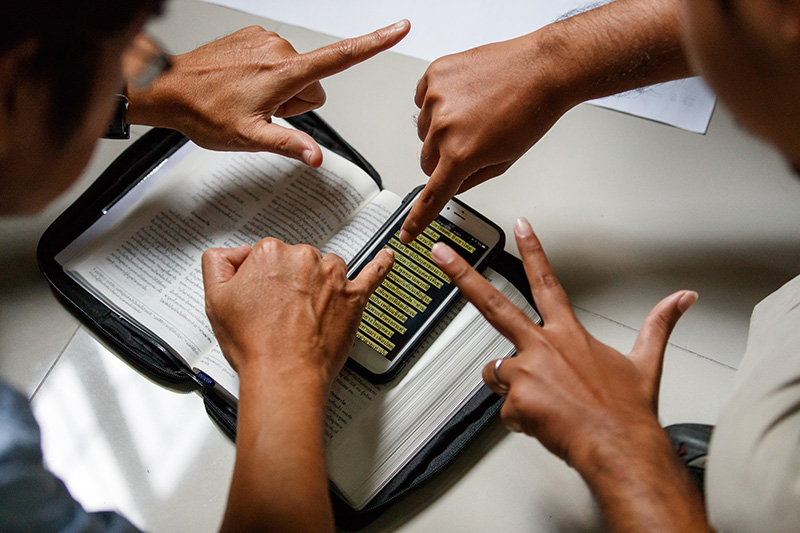
And there’s yet another layer of complication: Sign languages don’t use the same grammar as spoken languages. In other words, sign languages arrange the details of a story or narrative in a different order than we would.
A very simple example of this is in the story of the feeding of the 5,000 in Mark 6:30-44. In English, it’s not until the very end of that story, in verse 44, that we learn that, “a total of 5,000 men and their families were fed” (NLT).
But sign language translators would put this detail — about how many people there were and the crowd’s makeup — at the beginning of the story. Why? Because sign languages are visual so it’s important to set the scene before you tell the story.
Why Deaf Churches Struggle
If hardly any Deaf people can read and understand the Bible, how do Deaf churches form and grow? The troubling fact is that few do.
Historically, it’s been believed that only 2% of the global Deaf population have access to any Scripture in a language and format they clearly understand.
And those who do follow Christ struggle greatly to grow in their faith.

Want to make a difference? Start with prayer.
Deaf communities around the world are longing for access to Scripture in a language that touches their hearts.
Explore how you can pray for sign language Bible translation. →
“It used to be that when I’d go to a Bible study, everybody would have their book in front of them,” said Mark Penner. “And by the time the hour is up, maybe you’ve figured out what the … Scripture [in a written language] is trying to say, and then you’re done.”
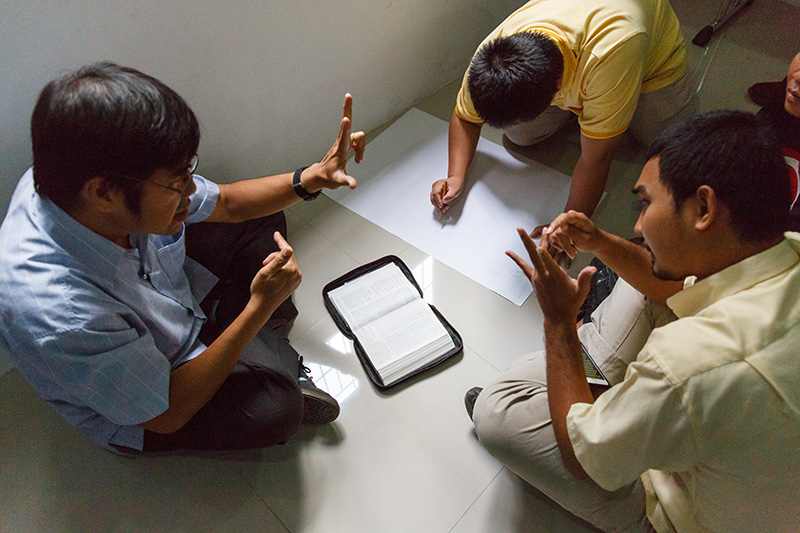
With such a great linguistic barrier between them and the written Scripture, Mark noticed that Deaf people in churches were rarely able to make the jump from the individual words of the passage to the deeper spiritual meaning. In the end, if all you’re learning in Bible study is the definition of words and not the deeper meaning behind them — God’s purpose and plan — what would be the result?
Mark explained: “… If you can’t grasp the meaning of the long, complex stuff, you grasp the meaning of the simple stuff. And that’s, ‘Do this, don’t do that. Do this, don’t do that.’ So your churches tend to end up being very legalistic. And you can’t really dig down and get a deep understanding of the love of God, the grace, the truth. There are just so many things about God that you can’t really grasp because it’s not in your language.”
Mark initially came alongside Deaf communities in Asia to help them plant churches. But together they quickly recognized that these churches would not succeed without Scripture in a language and format the people could understand. The Bible, after all, is foundational for all kinds of spiritual growth and development. And without Scripture, the global Church cannot fully engage in evangelism, discipleship and local church planting — all necessary to fulfill Jesus’ command to “… make disciples of all the nations …” (Matthew 28:19, NLT).
As a result of his experience, Mark decided to shift his focus from church planting to becoming a Bible translation consultant.
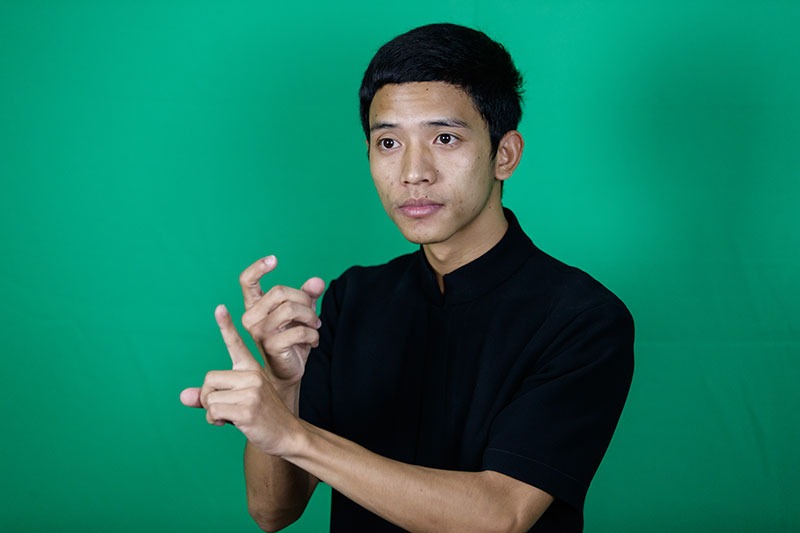
“Having a Bible that everyone can understand levels the playing field,” said Mark. “It doesn’t matter if you’ve been in the church 50 years or 50 days — you can look at it, you can understand it. Otherwise it’s only those Deaf with the ability to read and understand clearly that can preach, and people with both of those skills are very rare.”
The Future of Sign Language Translation
It would not be an exaggeration to say that sign languages are the final frontier of Bible translation. There’s still much that linguists don’t know about the sign languages of the world. But one thing is clear: The need for Bible translation among Deaf communities is great — much greater than we could have imagined even just a few years ago. Deaf communities represent one of the top five priorities for Wycliffe and our partners.
Today nearly 400 sign languages are used in the world that we know of. Yet, the American Sign Language Bible is the only full sign language Bible. Soon, Indian Sign Language will be the second sign language to have the full Bible.
If you ask Deaf translators who are currently involved in Scripture translation what their dreams are for the future, you’ll discover a common thread — they’re hungry for the Word, and they desperately want to share the Good News with their communities.

“My goal for the Scripture translation is to spread the Good News so that Deaf people don’t have to rely on the written Word but can have it in their heart language,” said Pastraporn Sarakong.
“I want them to be able to understand the Good News that, although we have all sinned, God has provided a way for us to be forgiven and reconciled to Him. I know that is God’s desire, and He’s put it on my heart to obey Him so that the Deaf are not left in the dark but can come to understand the Good News and come to know God.”
At the end of the day, that’s what all Bible translation work is about: People coming to faith in Jesus through the Word of God in their own language — whether that language is spoken, written or signed.